
Understanding Your Risk
Begin by identifying whether you live or work near an active or dormant volcano. Learn the specific hazards common to volcanic activity in your area, including ashfall, lava movement, and mudflows that can travel rapidly through valleys and low-lying regions .
Planning Ahead
A clear emergency plan ensures faster and safer response. Establish evacuation routes and meeting points, assign responsibilities within your household or workplace, and keep emergency contact numbers readily available, including those for national disaster agencies .
Preparing an Emergency Kit
Your emergency kit should support you for several days if evacuation or sheltering becomes necessary. Include drinking water, non-perishable food, a flashlight with extra batteries, a first aid kit, and protective items such as masks or cloths for ash inhalation and goggles to protect your eyes from airborne ash .
Staying Informed
Monitor official alerts and updates from disaster authorities and trusted emergency sources. Register for SMS alerts when available and follow radio broadcasts to stay aware of changing conditions .
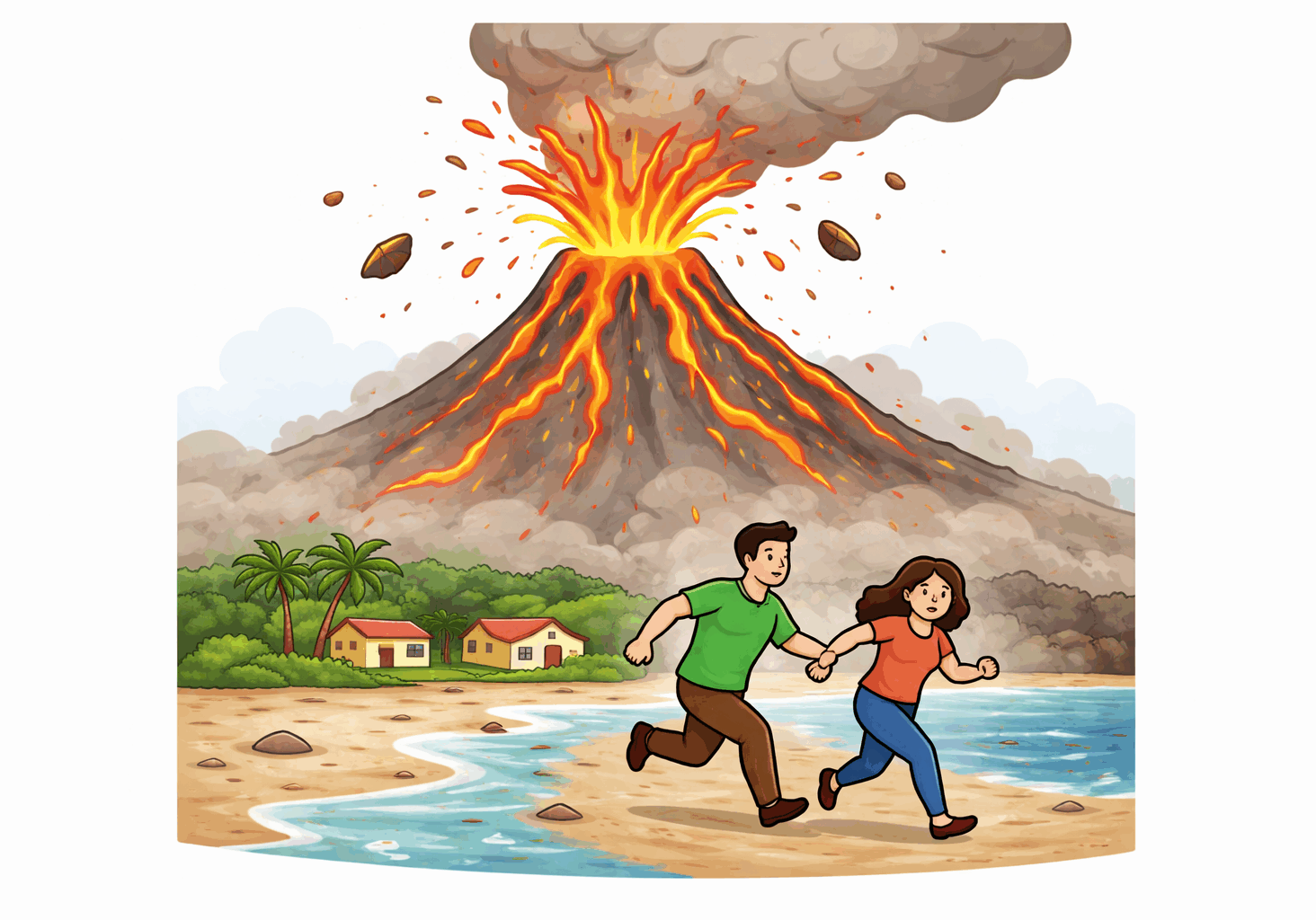
If authorities instruct evacuation, leave immediately and follow designated routes. Avoid river valleys and low-lying areas where mudflows may occur.
If ashfall is present and evacuation is not required, remain indoors with windows and doors closed to limit exposure. When outside is unavoidable, wear protective masks and goggles to reduce inhalation and eye irritation from volcanic ash .
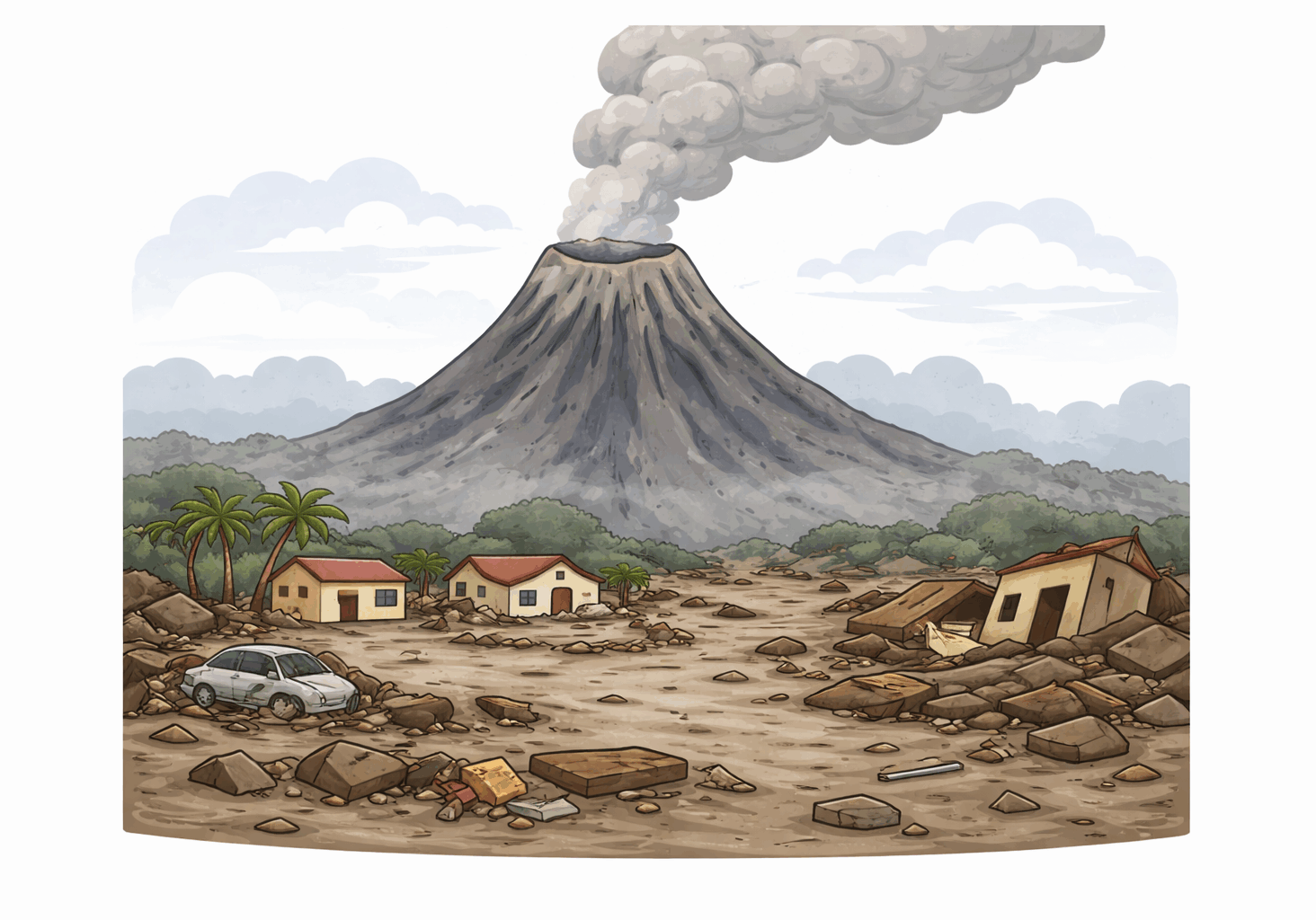
Return to affected areas only when authorities confirm it is safe. Ash can pose serious health risks if disturbed, so lightly wet it before cleaning to reduce airborne particles.
Check water sources for contamination before use and continue monitoring official updates in case of renewed activity or secondary hazards such as mudflows .