At a Glance
Quick checklist for Flood safety
Before
- Stay informed on local radio
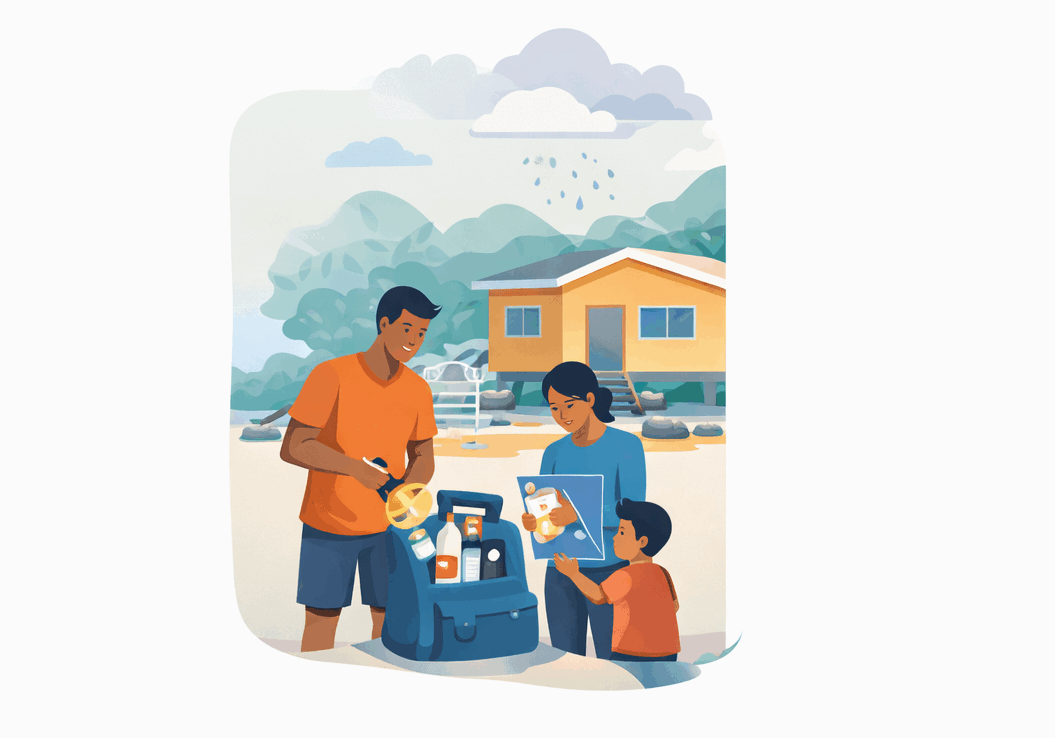
- Prepare an emergency bag with food, drugs, documents, flashlight, pet items etc.
- Know how to evacuate and safe alternative route
- Leave before flooding starts
During
- Disconnect electricity and gas
- Don’t walk or drive in flood waters
- Follow evacuation orders
After
- Avoid contact with flood water and swimming
- Don’t touch power lines
- When back home clean and disinfect surfaces and items
What Causes Floods
Floods are commonly caused by intense or continuous rainfall that the ground and drainage systems cannot absorb fast enough. They may also result from overflowing rivers, blocked drains, storm surge, or high tides combined with rainfall. These conditions can cause water levels to rise rapidly with little warning.
Before a Flood
Preparation reduces risk and helps households respond quickly and safely.
Understanding Your Risk
Knowing whether you live or work in a flood-prone area is the first step in preparedness. Stay informed by checking flood risk zones and registering for official weather alerts and emergency warnings so you can act early.
Planning Ahead
An emergency plan helps everyone know what to do before conditions become dangerous. Identify safe evacuation routes, agree on a family meeting point, and keep emergency contact information easily accessible.
Preparing an Emergency Kit
A basic emergency kit ensures you can manage safely for at least a few days if services are disrupted.
Flood Emergency Kit Essentials
- Drinking water, at least three days’ supply per person
- Non-perishable food items that require little or no preparation
- First aid kit and essential medications
- Flashlight and extra batteries
- Fully charged power bank or portable charger
- Important documents stored in waterproof bags
- Personal hygiene items and sanitation supplies
- Basic clothing and sturdy footwear
- Face masks, gloves, and cleaning cloths
- Emergency contact list and a battery-powered radio
Protecting Your Property
Simple actions can reduce damage before flooding occurs. Elevate electrical appliances where possible, clear drains and gutters regularly, and install check valves to help prevent floodwater from backing up into your home.
During a Flood
Your actions during a flood can prevent injury or loss of life.
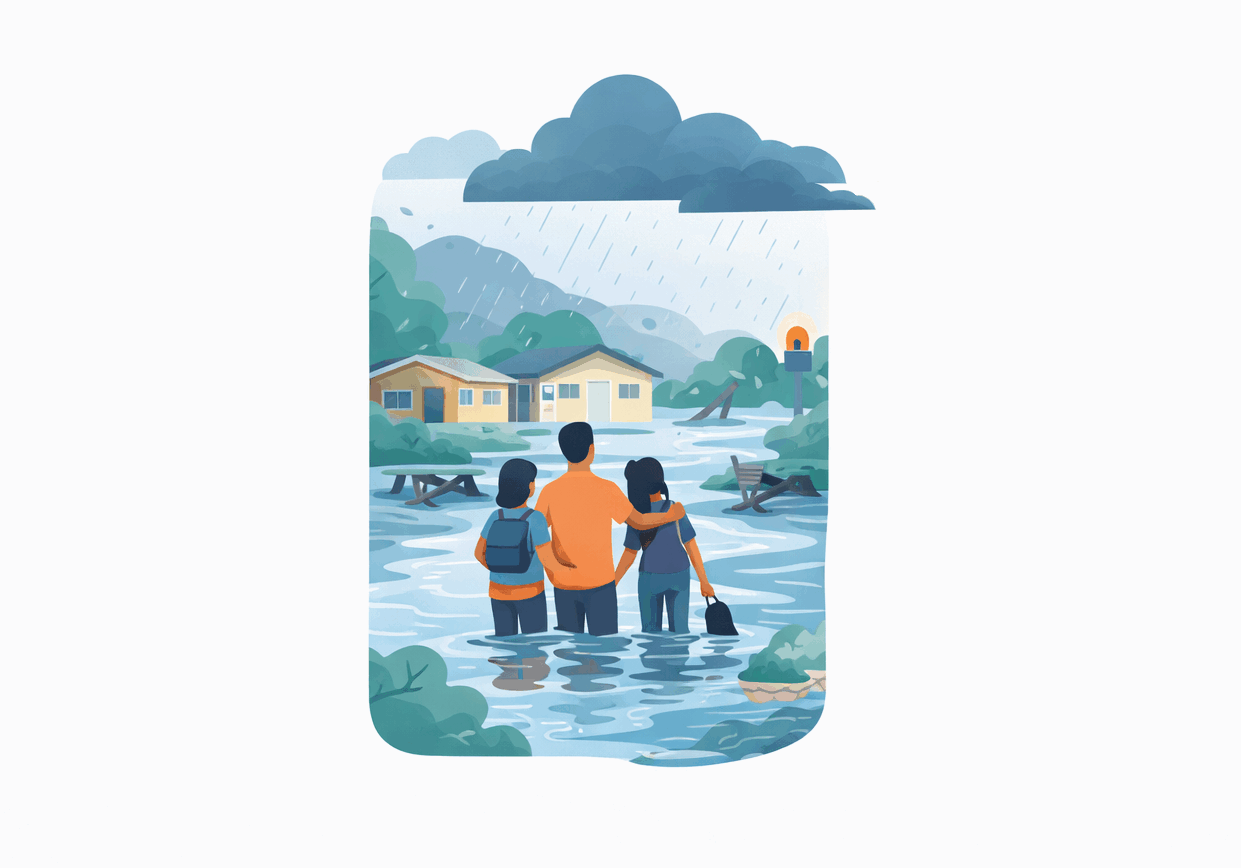
When flooding begins, safety becomes the priority. Move to higher ground as soon as possible and avoid walking or driving through floodwaters, even if they appear shallow. Stay informed by listening to official updates through radio, mobile alerts, or trusted local channels until conditions improve.
After a Flood
Safety remains important even after floodwaters recede.
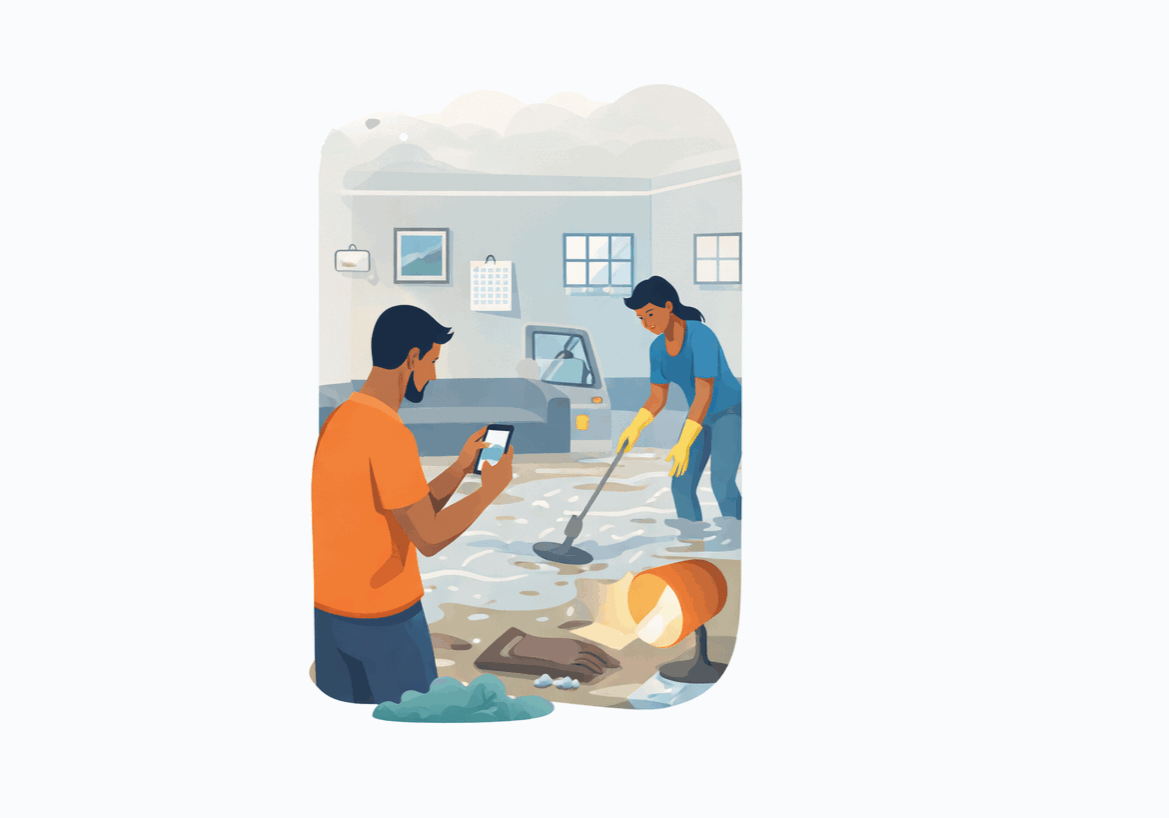
Return to your home only when authorities confirm it is safe to do so. Avoid standing water, which may contain contaminants or hidden electrical hazards. Once it is safe, document any damage carefully to support insurance claims and recovery efforts. Additionally, Regularly review and update your preparedness plans based on what you learn.