
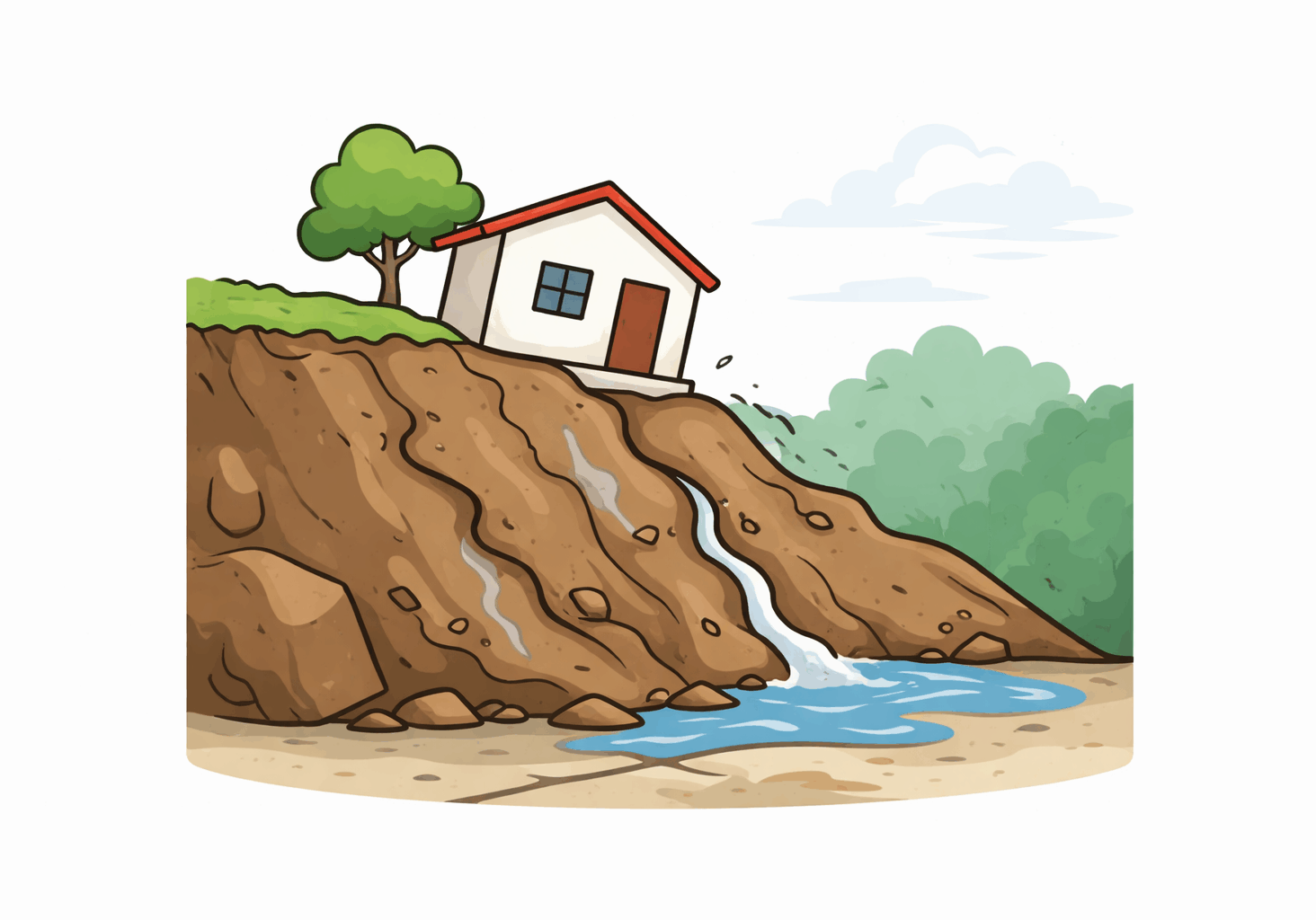
Understanding Your Risk
Landslides are more likely in areas with steep slopes, loose or saturated soil, poor drainage, or where vegetation has been removed. Heavy or prolonged rainfall increases soil weight and weakens its structure, while earthquakes and construction vibrations can suddenly trigger slope failure.
Communities near hillsides, riverbanks, road cuttings, and deforested zones face higher danger. Warning signs may include ground cracks, bulging soil, leaning poles or trees, and unusual water flow.
Planning Ahead
A clear emergency plan ensures faster evacuation and safer decision-making.
Identify safe evacuation routes and meeting points
Avoid building or staying near unstable slopes
Improve drainage around homes and land
Share emergency contacts with family members
Preparing an Emergency Kit
Your emergency kit should support you for several days if evacuation or isolation occurs. Include:
Drinking water and non-perishable food
Flashlight and batteries
First aid supplies and medications
Important documents in waterproof storage
Staying Informed
Monitor weather alerts and warnings during heavy rainfall. Follow updates from disaster authorities and local emergency services so you can act quickly if conditions worsen.
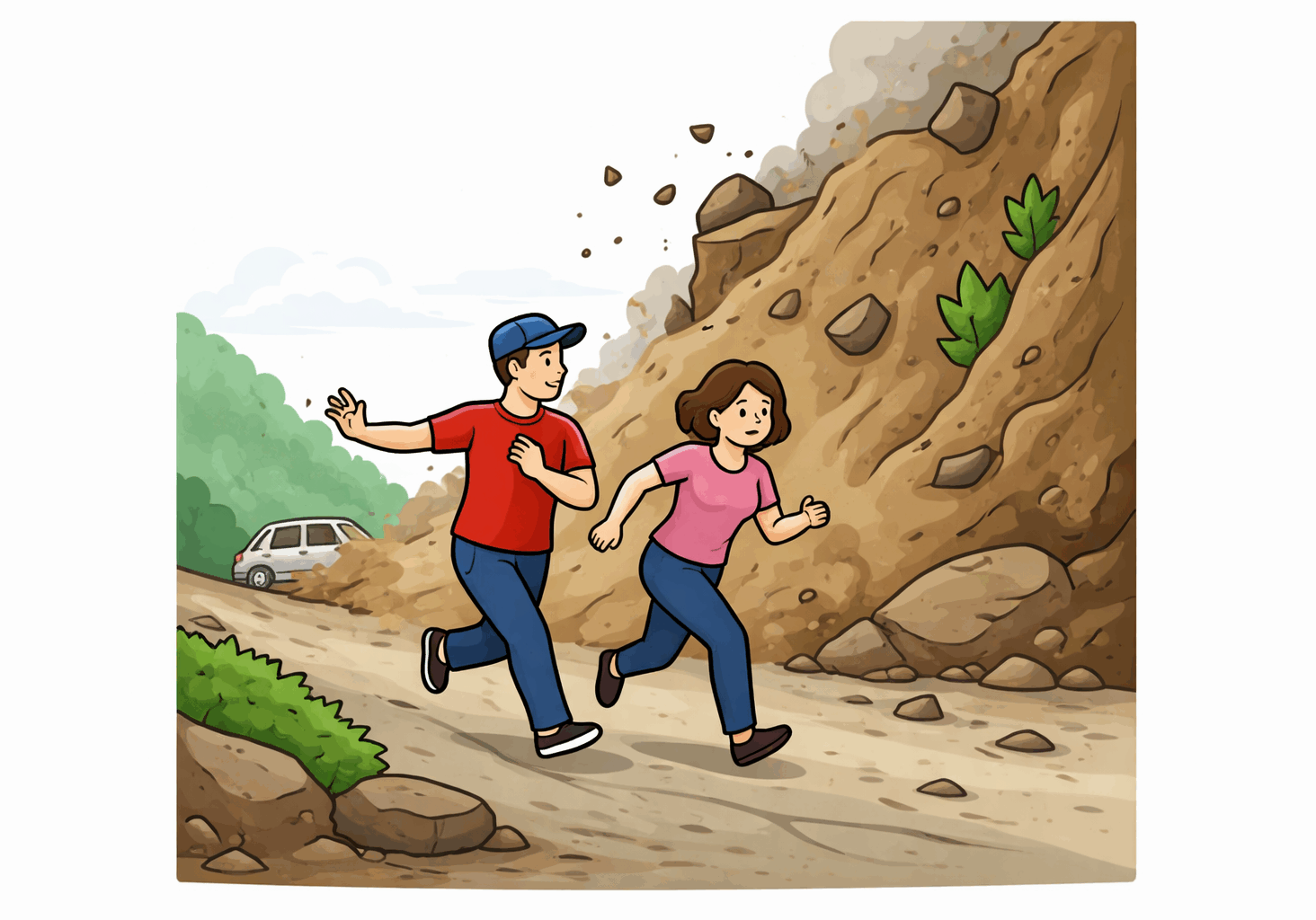
When a slope fails, soil, rocks, and debris move downhill with powerful force. Movement may be slow or extremely rapid depending on terrain and volume.
Major landslides can:
Bury homes and roads
Block rivers and cause flooding
Damage power and communication lines
Leave little time for escape
If you see soil, rocks, or water rushing downhill, move away immediately and head to higher ground. Stay clear of river valleys, hillsides, and damaged roads.
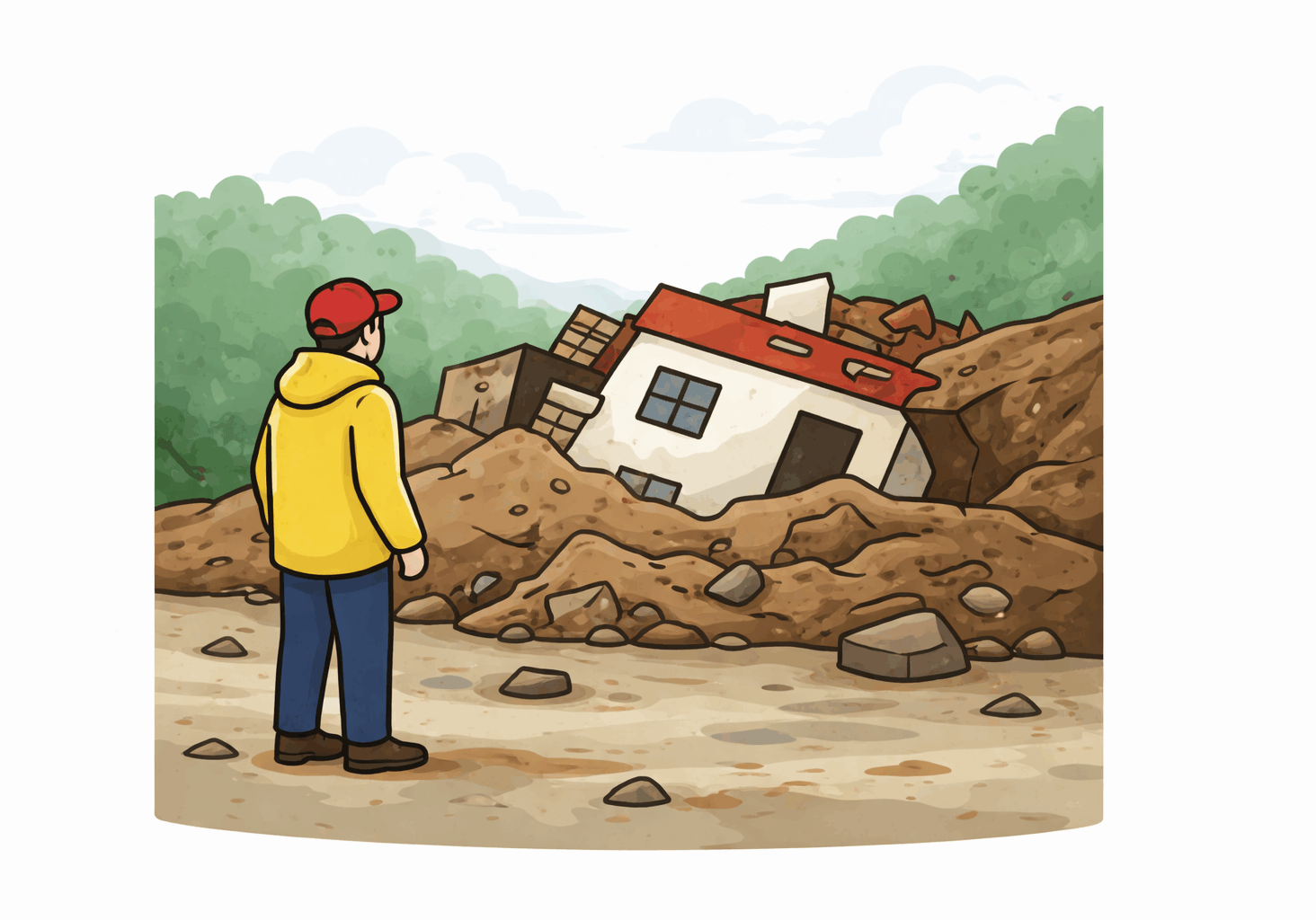
Once movement stops, thick mud, rocks, and debris often cover large areas. Roads may be blocked, isolating communities and slowing emergency response.
Secondary dangers may include:
Flooding from blocked waterways
Additional slope failures
Contaminated water supplies
Recovery can take weeks or months, especially if rainfall continue.
Finally, stay away from affected areas, as more landslides can happen, especially if rain continues. Check on family and neighbors, avoid unstable buildings, and follow instructions from local authorities before returning home.