At a Glance
Quick checklist for Tsunami safety
Before
- Stay informed
- Focus on early evacuation
- Create an emergency plan and practice it
During
- Follow official emergency instructions.
- Move to higher grounds immediately.
- Stay away from beaches and low-lying coastal areas.
After
- Avoid floodwaters.
- Be cautious of additional waves.
- Avoid coastal areas until confirmed by authorities.
Before a Tsunami
Early awareness and planning save lives by ensuring swift, safe evacuation.
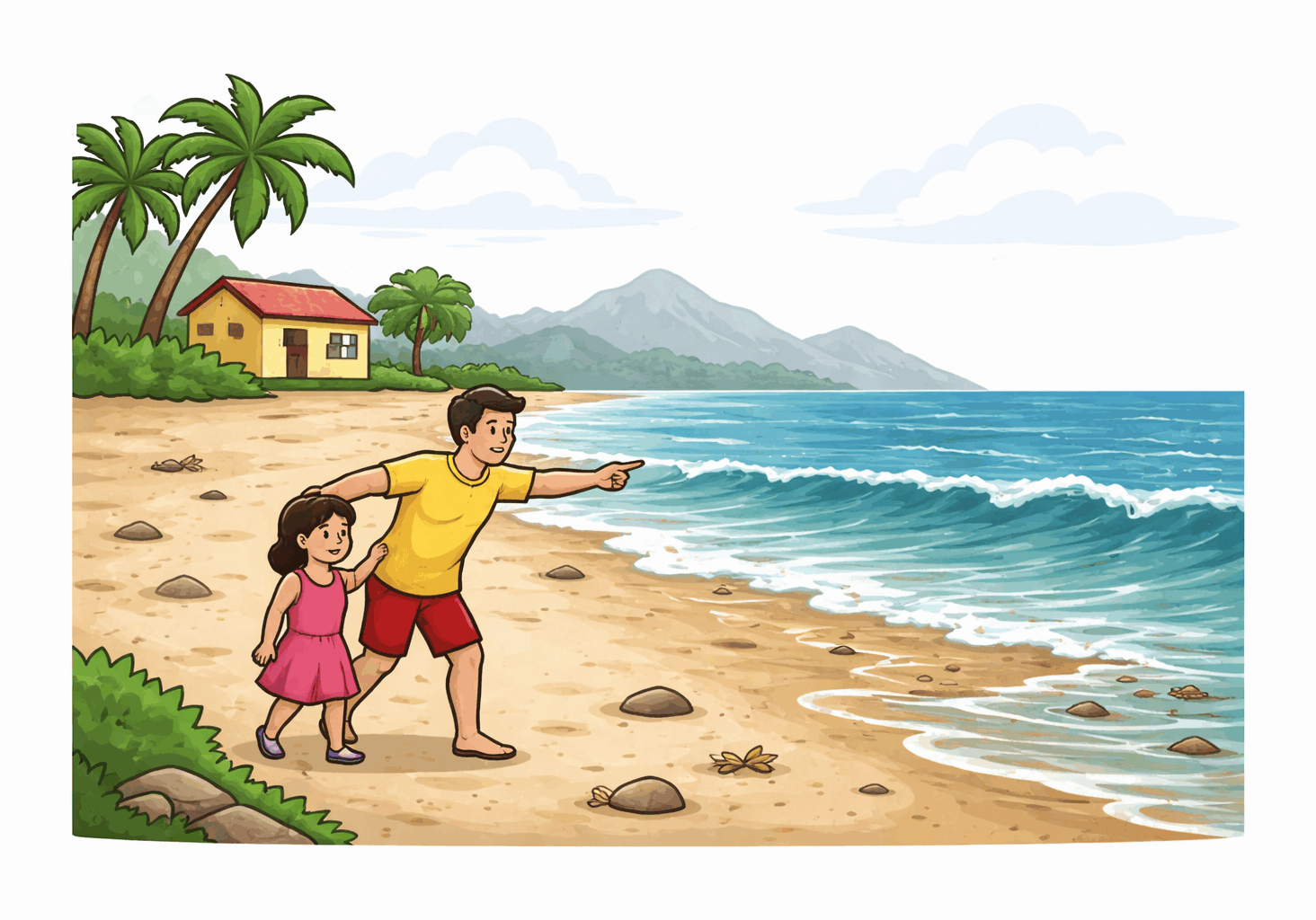
Understanding Your Risk
If you live, work, or travel near the coast, it is important to know whether your area is tsunami-prone. Learn local evacuation zones, high-ground locations, and official warning systems.
Register for tsunami alerts and warnings ensure to monitor official sources like CDEMA, local disaster offices, and trusted weather apps.
Planning Ahead
A clear emergency plan helps reduce confusion during an evacuation. Identify safe areas on higher ground, plan more than one evacuation route, and ensure all household members understand where to go and how to get there. Practicing the plan helps improve response time during real events.
Preparing an Emergency Kit
An emergency kit supports your safety if you need to evacuate quickly or remain away from home for several days.
Your kit should include drinking water:
- 1 gallon per person per day for at least 3 day
- Non-perishable food, essential medications
- First aid supplies
- A flashlight with spare batteries
- A battery-powered or hand-crank radio
- Important documents in waterproof containers
- Cash and basic personal hygiene items.
Store the kit in a location that is easy to access and review its contents regularly.
During a Tsunami
Immediate action and moving to higher ground are critical for survival.
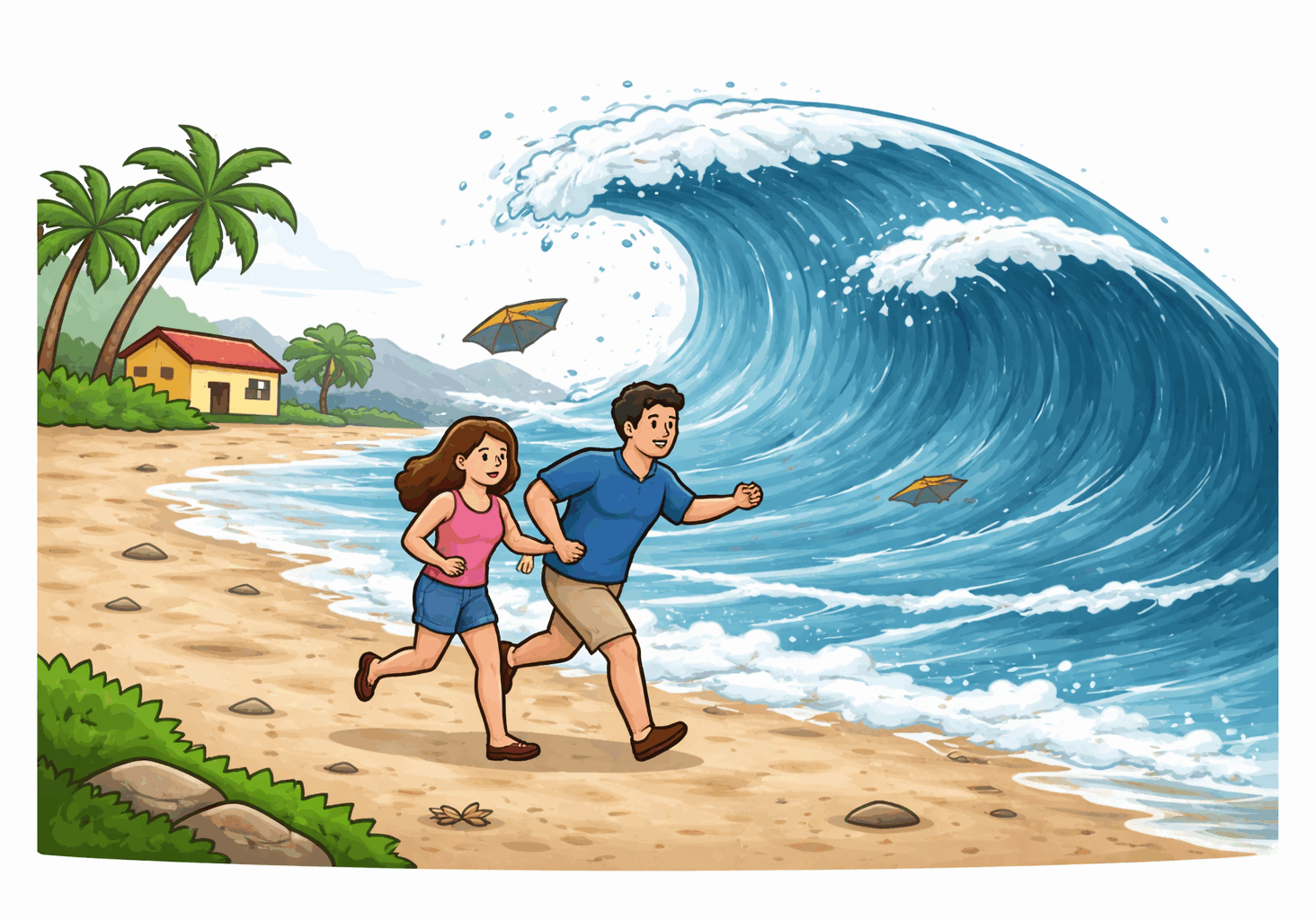
If you feel strong or prolonged ground shaking near the coast, or notice the sea suddenly receding, move to higher ground immediately.
Do not wait for official warnings in these situations.
Avoid beaches, harbors, bridges, and low-lying coastal roads. Stay away from the shoreline and do not attempt to observe the waves.
Continue to monitor official emergency broadcasts and follow instructions from authorities, as additional waves may follow the first.
After a Tsunami
Caution and informed recovery help prevent further harm and support safe return.
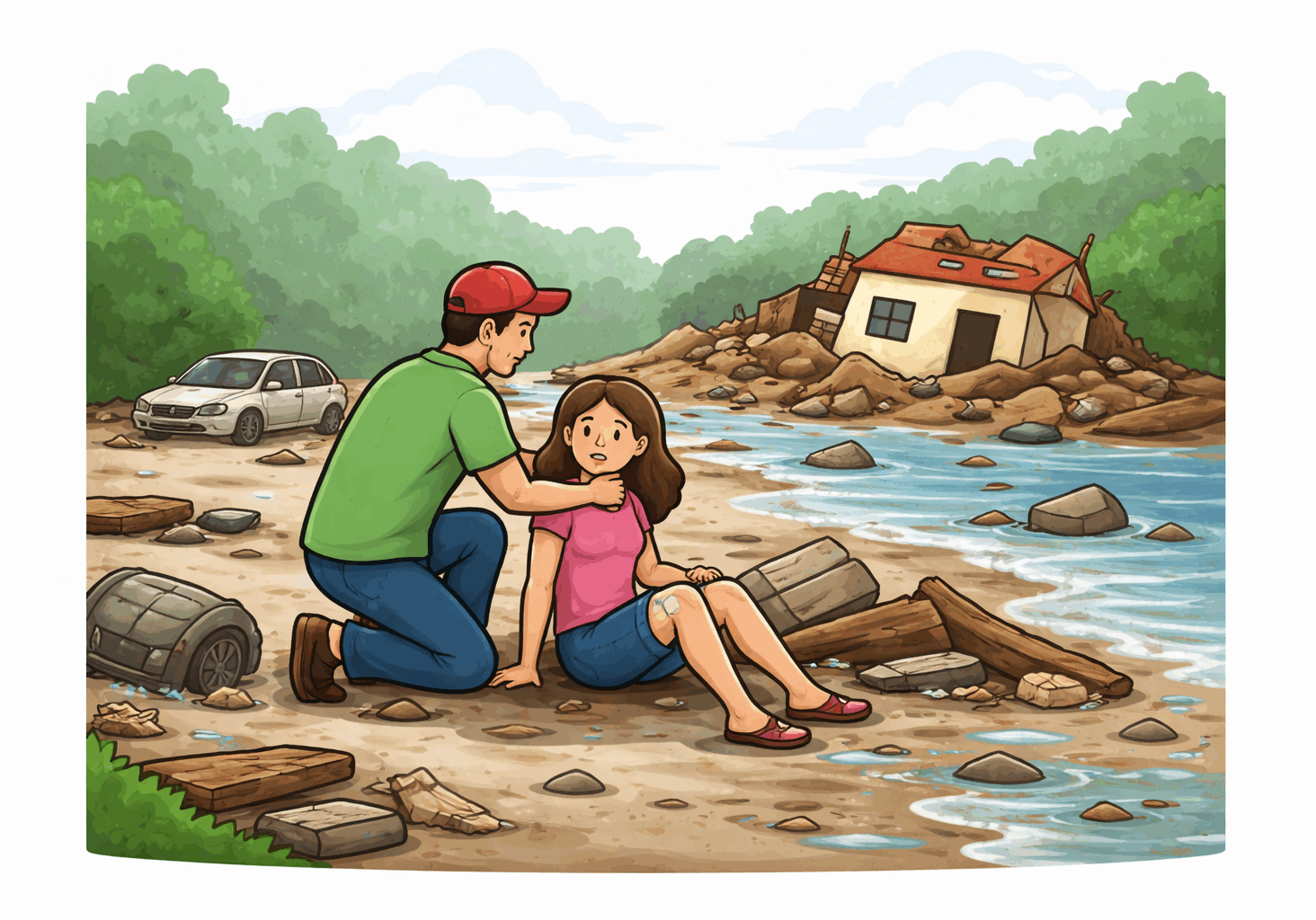
Return to affected areas only when authorities confirm it is safe. Floodwaters may contain debris, contaminants, or hidden hazards, and damaged structures may be unstable.
Inspect buildings carefully before entering, avoid downed power lines, and document any damage for recovery or insurance purposes. Remain alert for aftershocks or further warnings, as tsunamis can occur in multiple waves over time.